I retired from the energy business in 2014 and started writing poetry. At first I shared my writing with family and friends. Then I set myself a challenge to write a poem every day for a year. After meeting that goal I just kept going and started this blog in 2021. I hope you enjoy reading my poems. Remember happiness is just a state of mind and poetry is great nourishment.
There are so many different ways to look at this, here are some I collected through research:
Optimism (Half Full) vs. Pessimism (Half Empty)
1. Optimist: Sees opportunities and potential in every situation (half full).
2. Pessimist: Focuses on what is missing or lacking (half empty).
3. Realist: Acknowledges the glass has both water and air without emotional bias.
4. Pragmatist: “Does it matter if it’s half full or empty? Just drink it.”
5. The Entrepreneur: “How can I sell the remaining space in the glass?”
6. The Scientist: “Technically, the glass is always 100% full—half water, half air.”
7. The Philosopher: “Does the glass even exist, or is it an illusion?”
8. The Engineer: “The glass is twice as big as it needs to be.”
9. The Environmentalist: “At least the glass isn’t leaking!”
10. The Economist: “It’s a case of supply meeting fluctuating demand.”
Behavioral and Psychological Perspectives
11. Growth Mindset: “What can I learn to fill the rest of the glass?”
12. Fixed Mindset: “The glass will always be this way, nothing I do matters.”
13. Gratitude Perspective: “I’m thankful for the water I have.”
14. Scarcity Mentality: “What if I run out? I need more!”
15. Abundance Mentality: “There will always be enough water to go around.”
16. Positive Psychology: Focusing on the glass half full encourages happiness.
17. Negative Thinking: Focusing on half empty creates stress and anxiety.
18. Cognitive Reframing: Shifting between both perspectives can improve mental flexibility.
19. Self-Compassion: “It’s okay if my glass is only half full for now.”
20. Perfectionism: “Why isn’t the glass completely full?”
Social and Cultural Interpretations
21. Cultural Norms: Some cultures focus on what’s missing to encourage improvement (half empty), while others celebrate what is present (half full).
22. Team Dynamics: Positive leaders focus on half full, while critical ones dwell on half empty.
23. Relationship Impact: Partners who see half full focus on shared experiences, while those focused on half empty dwell on what’s wrong.
24. Generational Differences: Younger people may see potential (half full), while older generations might view it with caution (half empty). 25. Media Influence: News tends to highlight half-empty narratives to grab attention.
Philosophical and Existential Thoughts
26. Existentialist: “What does it matter? The water will evaporate eventually.”
27. Stoic: “Focus on what you can control—drink the water you have.”
28. Optimistic Nihilism: “The glass being half full or empty is meaningless, but enjoy it anyway.”
29. Temporal Perspective: “The glass will refill or empty over time.”
30. Mindful Perspective: “Appreciate the glass as it is right now.”
Personally I like to keep things uncomplicated so I am sticking with number 4
Before humans evolved, the earth was mostly covered in vegetation
Plant life had reached a plateau of evolution so plants started to investigate ways to farm other lifeforms
Plants got together and brainstormed ideas for evolving further
They elected leaders and formed a system of governance
Plant evolutionary committees developed plans and made recommendations
The elected plant president reviewed the plans and made policy decisions
The first step was for plants to provide targeted food and shelter to insects that helped pollinate and disperse seeds to generate more prolific plant life
So plants started to farm insects for their own benefit
Later they reached another evolutionary plateau which needed a massive jump to make plants grow faster and more widespread
The plant president recognized the potential for farming humans
He saw their capabilities to cultivate the land and create more space for planting
He oversaw the research and development of new plants suitable for human consumption
Plants then provided nutritious food for humans to help their brains develop further
The plant president knew that humans need to work and to play
So he implemented policies that would create plant species for human recreational drugs
Hops were developed so that humans could make beer and get drunk
Cannabis plants provided drugs for humans to get high
Despite being drunk and high for most of their waking moments, humans learned to mechanize and industrialize the growing of plants
Plants noticed that humans liked to play sports, especially on grass
Plants also acquired a love of spectating these sports so they developed special grasses
Plants now have the best views at Wimbledon, at every golf Masters and all soccer stadiums
Sport thrives because of perfect playing surfaces and plants get to see it all for free
Human populations grew but they became vulnerable to sickness and diseases
Pandemics wiped out huge sections of human population
One day the chief scientific plant asked to see the plant president
He urged the president to undertake research to improve the health of their farmed humans
Plants were specifically developed to provide medicine for humans
Human health improved and they were able to grow vast quantities of plants all over the planet
Plants allow their farmed humans to live for around 70 years or so
Expired humans are either buried to create plant compost or burned to make plant fertilizer
Plants allowed humans to falsely claim they had invented agriculture to farm plants
Humans like to feel that they are in control of their own destiny, even if its not true
Plants recognize that at some point, the earth will no longer be able to sustain human life
This might be through human induced climate change and global warming
Or it could be from a natural disaster like a huge meteor strike
It may even be through the human stupidity of mutual destruction in a global nuclear war
In every case, plants will survive all such disasters
Their human farming experiment will one day come to an end
Plants will regroup and find some other species to farm
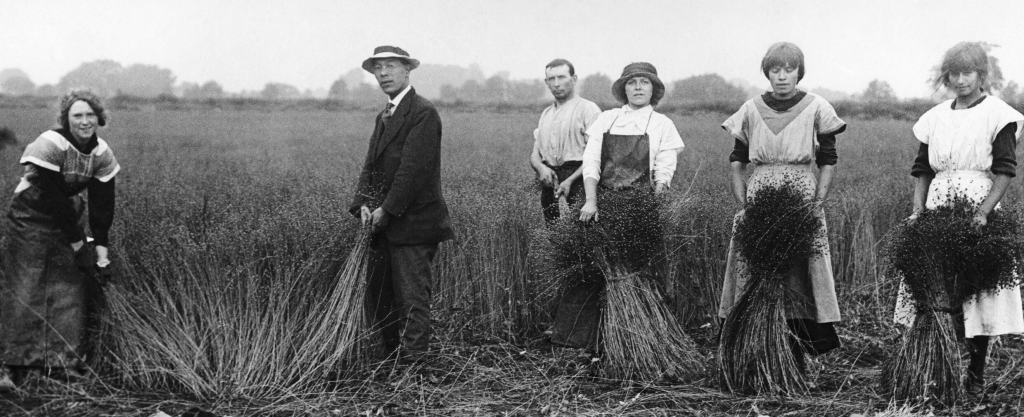
So next time you look at a field in the countryside
Don’t be fooled into thinking that humans are farming that field







 Cheeky Monkey Poetry