
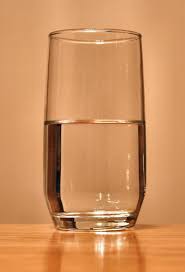
There are so many different ways to look at this, here are some I collected through research:
Optimism (Half Full) vs. Pessimism (Half Empty)
1. Optimist: Sees opportunities and potential in every situation (half full).
2. Pessimist: Focuses on what is missing or lacking (half empty).
3. Realist: Acknowledges the glass has both water and air without emotional bias.
4. Pragmatist: “Does it matter if it’s half full or empty? Just drink it.”
5. The Entrepreneur: “How can I sell the remaining space in the glass?”
6. The Scientist: “Technically, the glass is always 100% full—half water, half air.”
7. The Philosopher: “Does the glass even exist, or is it an illusion?”
8. The Engineer: “The glass is twice as big as it needs to be.”
9. The Environmentalist: “At least the glass isn’t leaking!”
10. The Economist: “It’s a case of supply meeting fluctuating demand.”
Behavioral and Psychological Perspectives
11. Growth Mindset: “What can I learn to fill the rest of the glass?”
12. Fixed Mindset: “The glass will always be this way, nothing I do matters.”
13. Gratitude Perspective: “I’m thankful for the water I have.”
14. Scarcity Mentality: “What if I run out? I need more!”
15. Abundance Mentality: “There will always be enough water to go around.”
16. Positive Psychology: Focusing on the glass half full encourages happiness.
17. Negative Thinking: Focusing on half empty creates stress and anxiety.
18. Cognitive Reframing: Shifting between both perspectives can improve mental flexibility.
19. Self-Compassion: “It’s okay if my glass is only half full for now.”
20. Perfectionism: “Why isn’t the glass completely full?”
Social and Cultural Interpretations
21. Cultural Norms: Some cultures focus on what’s missing to encourage improvement (half empty), while others celebrate what is present (half full).
22. Team Dynamics: Positive leaders focus on half full, while critical ones dwell on half empty.
23. Relationship Impact: Partners who see half full focus on shared experiences, while those focused on half empty dwell on what’s wrong.
24. Generational Differences: Younger people may see potential (half full), while older generations might view it with caution (half empty). 25. Media Influence: News tends to highlight half-empty narratives to grab attention.
Philosophical and Existential Thoughts
26. Existentialist: “What does it matter? The water will evaporate eventually.”
27. Stoic: “Focus on what you can control—drink the water you have.”
28. Optimistic Nihilism: “The glass being half full or empty is meaningless, but enjoy it anyway.”
29. Temporal Perspective: “The glass will refill or empty over time.”
30. Mindful Perspective: “Appreciate the glass as it is right now.”
Personally I like to keep things uncomplicated so I am sticking with number 4
Where do you stand?
 Cheeky Monkey Poetry